Your roof,
rebuilt as a
power station.
Systems designed around your roof, your shading and your half-hourly usage — quoted after an on-site assessment, not from a postcode. Installed by appropriately licensed electricians.
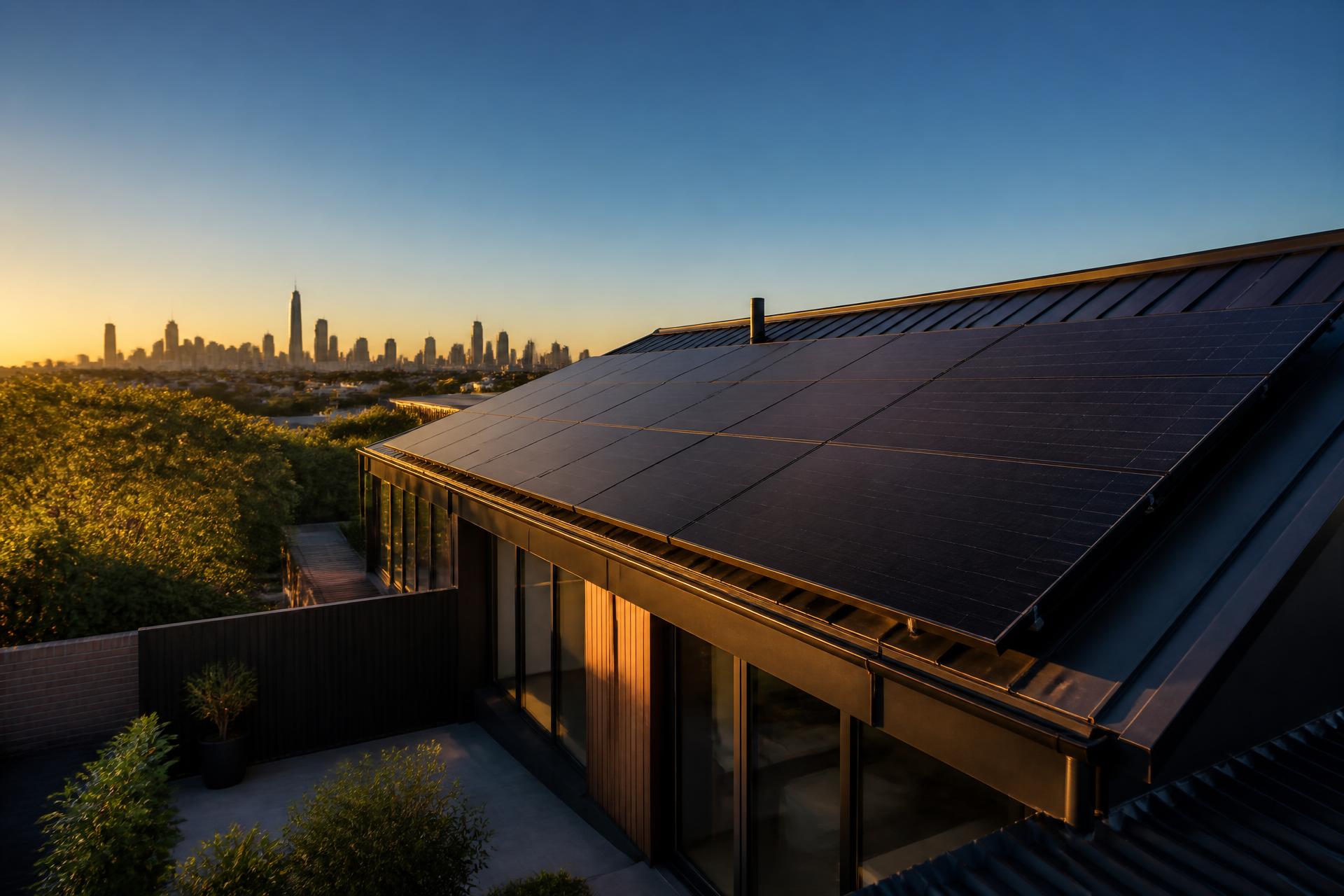
Melbourne gives you four seasons in a day. Most systems are designed for one of them.
We start from your half-hourly consumption and a shading model of your actual roof, then design the array around what your household really draws — and when.
Sized on a postcode
Package systems are quoted before anyone has seen your roof pitch, your tile type or the gum tree over the west face.
Modelled on nobody's day
Generic quotes assume you're home at noon. Most households aren't — which is where the promised savings quietly disappear.
Priced, then re-priced
Install-day variations for switchboards, rail runs and tile work turn a headline price into something else entirely.
What a 6.6kW system
actually produces.
Relative monthly generation on a north-facing Melbourne roof. Winter still delivers roughly 40% of peak — enough to cover most daytime base load.
Five parts.
No mystery brands.
Tap through each component to see exactly what we specify and why it matters on a Melbourne roof.
N-type TOPCon cells with near-zero light-induced degradation.
N-type TOPCon cells with near-zero light-induced degradation.
Six choices that
change the outcome.
Each one shifts how much power lands inside your house — and how long the system keeps delivering it.
Low-light capture
Textured anti-reflective glass extends generation into overcast mornings and long summer evenings.
+6% diffuseHeat resilience
Low temperature coefficients hold output on 40°C days, when the grid is most expensive.
−0.29%/°CHail-rated glass
3.2mm tempered glass and reinforced frames tested against Victorian storm loads.
25mm hailShade tolerance
Half-cut cells plus optimisers where needed, so one chimney doesn't drag a whole string down.
Per-panel MPPTRoof-specific mounting
Tile, Colorbond, Klip-Lok or membrane — engineered rail and flashing for each substrate.
Wind region AMonitoring from day one
Per-string monitoring in your phone, with alerts if production drops below the modelled curve.
5-min dataFrom first call to
first export credit.
You approve a layout and a number before anything is ordered. No install-day variations.
Roof & usage assessment
We pull your interval data, model shading across the year and photograph every roof face.
Design & fixed quote
A panel layout, a production forecast and a fixed price with STCs and rebates already deducted.
Install day
Licensed electricians on site, roof protection, tidy conduit runs and a full electrical test before we leave.
Connection & handover
We lodge grid approval, configure monitoring and walk you through the app in person.
What it costs,
before you ask.
Indicative after-rebate ranges for Melbourne homes. Your fixed price is issued after the roof assessment.
Indicative estimate only. Actual results vary with equipment, system size, orientation, shading, weather, household load profile, electricity tariff, export rate, battery settings and usage. Example inputs: 34c/kWh usage tariff, 6c/kWh feed-in, 52–68% self-consumption, Melbourne irradiance. Ranges include federal STCs and the Victorian Solar Homes rebate only where eligible. How we calculate savings.
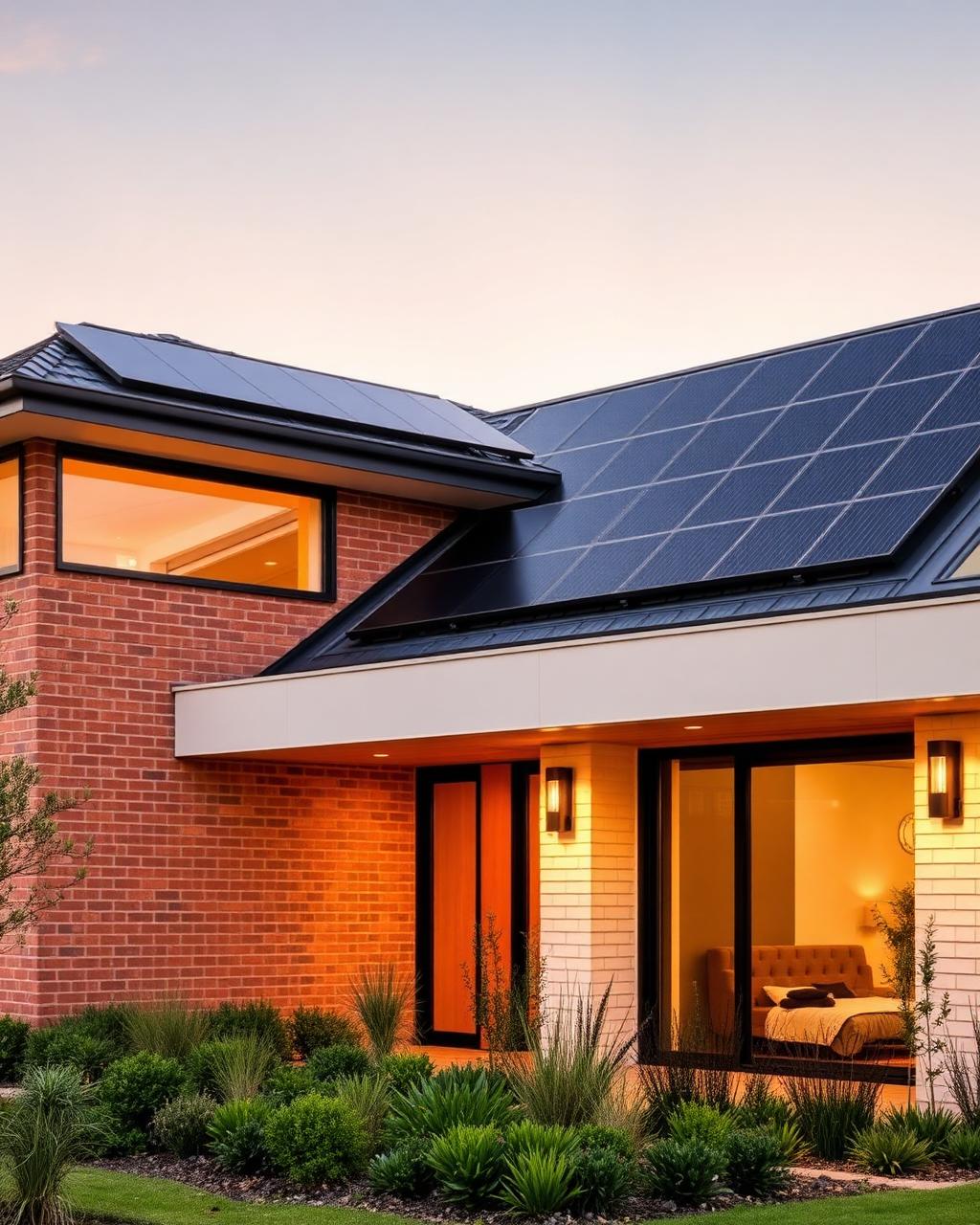 Illustrative 8.2kW layout
Every design shows the panel layout and the modelled winter numbers before you pay a cent — and the forecast is checked against your interval data.
Solar,
answered plainly.
Most homes we design land between 16 and 26 panels (6.6kW to 13kW). The limit is usable roof area, orientation and your switchboard — we map all three during the assessment and show you the layout before you commit.
Every part talks
to the others.
Solar, storage, charging, comfort and hot water are designed together — not bolted on one at a time.
Get a solar design for your actual roof.
A free assessment gives you a panel layout, a production forecast and a fixed price after rebates — with no obligation.